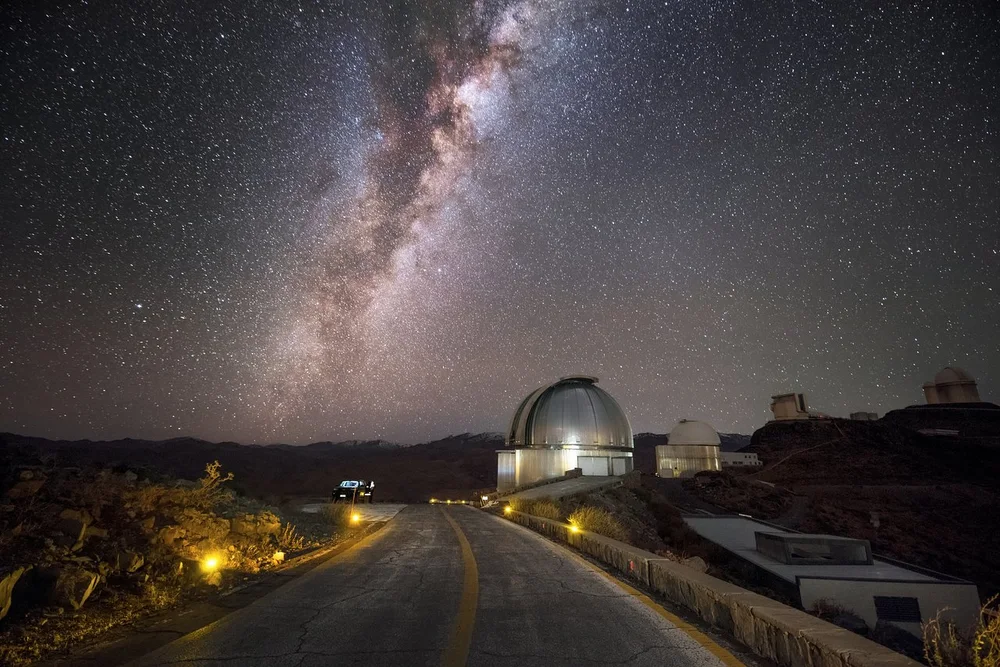
Before you go
Choose a place you’re allowed to visit after dark, with an open view and a safe route back. Check cloud cover and moonlight before heading out.
Begin with one bright star
Pick a bright star or familiar constellation. Find it without optics before you consult your chart, so you can return to it as your eyes adjust.
Let the fainter stars emerge
Give your eyes time away from bright light. Use the dimmest light that lets you read your chart safely. Spend the waiting time tracking the same patch of sky.
Repeat the same observation
Compare how many points you can see in a small area early in the session and again later. Write down nearby lights, clouds, and how much moonlight was present.
In your notebook
What changed more during the session, the sky conditions or your ability to see faint stars?
Open the printable field sheet